
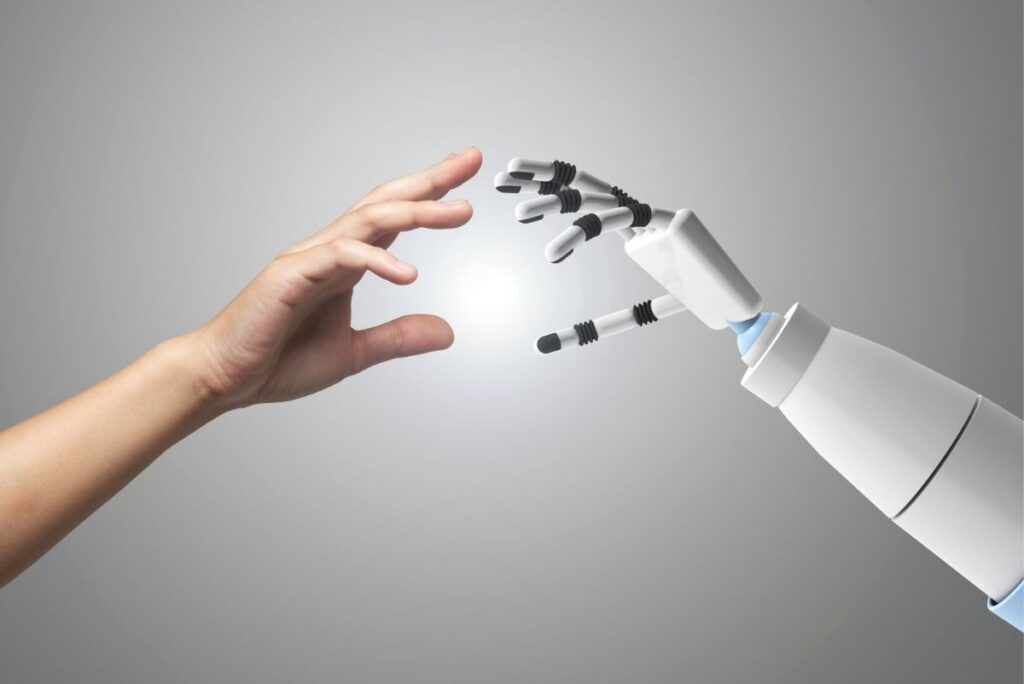
Modern convenience and digital acceleration are reshaping how we relate, and leaders are feeling the impact. Social media feeds fragment shared experiences, remote work stretches teams across time zones, and AI adoption is accelerating faster than many organizations can manage.
Human connection is fraying and becoming a scarce resource.
For leaders, this shift shows up as disengagement, mistrust, and stalled change initiatives. Understanding the subtle ways technology, convenience, and unmanaged change influence relationships is no longer optional; it’s critical. Measuring human response, change resilience, and connection skills has become the frontline of effective leadership, revealing gaps that traditional metrics overlook.
Is AI Destroying Human Connections or Exposing a Deeper Shift?
Is AI destroying human connections, or is it simply exposing a deeper shift that has been underway for years? While artificial intelligence feels sudden and disruptive, the truth is that workplace transformation has been building for decades.
AI itself isn’t new anymore, but its adoption is accelerating rapidly. Pressure from boards, investors, and competitive markets is pushing leaders to implement tools quickly and at scale. From the executive perspective, speed signals innovation and survival. From the employee perspective, that same speed can feel destabilizing. When change moves faster than communication and clarity, people naturally interpret urgency as threat rather than opportunity.
This widening disconnect creates what we might call the fear gap:
- Executives fear being left behind in an increasingly competitive market.
- Employees fear being replaced, devalued, or rendered obsolete.
Each side begins to question the other’s motives and intentions, which causes mistrust.
When technology is introduced without explanation, listening, training, or emotional acknowledgment, it widens distance instead of driving progress. AI doesn’t inherently damage human connection. More often, it’s the unmanaged human response to rapid change that erodes trust and creates the sense that connection is slipping away.
Does Social Media Enhance or Hinder Human Connection?
The answer to whether or not social media enhances or hinders human connection is more nuanced than a simple yes or no. Social platforms were originally designed to help us stay in touch, share experiences, and maintain relationships across distance. In many ways, they’ve succeeded. But at the same time, the structure of modern digital life has quietly reshaped how (and how deeply) we connect.
How Social Media Hinders Human Connection
For much of the 20th century, media created shared cultural moments. The 1983 finale of MASH* drew over 100 million viewers in the United States, meaning a massive portion of the country experienced the same story at the same time. Today, that kind of overlap is rare. Infinite feeds mean infinite fragmentation.
Now consider how today’s platforms function:
- Hyper-personalization reduces shared experiences.
- Algorithms fragment collective identity into niche interest groups.
- Digital interaction often replaces physical micro-interactions.
When no two people see the same content, common ground shrinks. Conversations become harder to start because reference points disappear.
The Hidden Cost of Modern Convenience
This fragmentation extends beyond social media. Modern convenience has quietly reduced everyday friction and connection:
- Grocery delivery instead of standing in line and interacting with those around you.
- Self-checkout instead of brief conversations with the cashier.
- Remote work without intentional connection rituals.
- Earbuds creating isolation in shared spaces.
Convenience removes friction, but friction often creates connection. In pursuing efficiency, organizations have unknowingly mirrored this same pattern, streamlining processes while unintentionally stripping away moments that build trust and belonging.
The Entropy Effect: Why Human Systems Naturally Drift Apart
Modern work now operates in what could be described as an “entropy economy,” where human systems naturally drift apart without deliberate effort to hold them together.
In physics, entropy refers to the tendency of systems to move toward disorder unless energy is applied. The same principle applies to organizations. Without intentional cohesion, alignment weakens, relationships thin out, and misunderstandings multiply.
Remote and hybrid work models, while offering flexibility, increase geographic and psychological separation. Work-life boundaries have dissolved, blurring the space where recovery and reflection once occurred. At the same time, anxiety flows in constantly from external headlines, economic uncertainty, and social change, quietly shaping how people show up each day. None of this happens because individuals lack commitment. It happens because connection now requires more intention than proximity once provided.
In this environment, connection has become the scarce resource. And like any scarce resource, it must be measured, protected, and actively reinforced if organizations want to remain change-resilient.
Why Measure Employee Engagement in the Age of Disruption?
Why measure employee engagement in the middle of constant disruption? Because engagement is no longer just a culture metric; it’s a stability metric. When change is continuous and uncertainty is high, engagement becomes an early signal of whether your workforce is aligned or quietly pulling away.
The better question may be: “How do you measure employee engagement effectively in an environment where sentiment can shift in weeks, not years?”
Traditional engagement surveys were built for a slower era. Annual surveys are often too infrequent to capture rapid shifts in morale. By the time results are compiled and shared, the data may already be outdated. Engagement scores also tend to have short shelf lives, especially during periods of restructuring, AI implementation, or leadership change. Trust can erode quickly when communication lags behind reality and measuring once a year simply isn’t enough when change is happening every quarter.
What Most Engagement Metrics Miss
Most traditional surveys focus on satisfaction, alignment, and discretionary effort. But they often overlook deeper human capacities that determine whether engagement is sustainable under pressure, including emotional regulation, empathy, adaptability, stress response, and trust-building capacity. These behavioral factors shape how people experience change, not just how they rate it.
How to Measure Employee Engagement Metrics More Effectively
To measure engagement more effectively, leaders should track leading indicators that reveal change resilience and cohesion:
- Frequency of feedback loops: How often employees have meaningful opportunities to give and receive input.
- Psychological safety signals: Whether people feel safe speaking up, admitting mistakes, or challenging ideas.
- Cross-team collaboration: The strength of connection across functions rather than within silos.
- Change fatigue indicators: Signs of burnout, withdrawal, or resistance during transformation.
- Manager change resilience: A leader’s ability to regulate stress and model stability for their team.
The important shift is this: it’s not just about satisfaction anymore. It’s about change resilience and cohesion under pressure.
Change Management Leadership vs. Change Management Processes
Organizations often confuse managing change with leading change. Both matter, but they are not the same. Managing change focuses on structure and execution. Leading change focuses on people and cohesion. In times of disruption, that distinction becomes critical.
Managing change typically refers to:
- Timelines: Project plans, milestones, and deadlines ensure initiatives move forward on schedule.
- Rollouts: Structured implementation plans coordinate systems, tools, or policy shifts.
- Communication and training: Information is distributed and employees are trained on what to do differently.
These elements are necessary. But they are procedural. Leading change, on the other hand, addresses the human experience beneath the plan:
- Cohesion: Strengthening the bonds that keep teams aligned under stress.
- Belonging and shared identity: Reinforcing a sense of “we” during uncertainty.
- Emotional containment and psychological safety: Helping teams process anxiety without letting it fracture trust.
Where Change Leadership Breaks Down
Change leadership tends to break down not because strategy is flawed, but because human dynamics are overlooked. AI may be introduced too quickly, without space for dialogue. Return-to-office mandates may be enforced without acknowledging competing needs. Leaders under pressure may model stress reactivity instead of steadiness. Conversations become transactional check-ins rather than meaningful listening sessions, and advice replaces empathy.
The consequences compound quickly. Trust declines as employees question intent. Engagement drops as uncertainty rises. Turnover increases, particularly among high performers who have options. It’s no surprise that research consistently shows roughly 70% of change initiatives fail, and disengagement costs organizations an estimated 34% of an employee’s salary per year.
The common denominator isn’t poor planning. It’s unaddressed human capability gaps: the skills required to sustain connection, regulate stress, and lead through uncertainty.
What Leaders Can Do to Intentionally Rebuild Connection
If connection has become a scarce resource, leaders can no longer rely on proximity or routine to sustain it. In a fast-moving, technology-driven workplace, cohesion must be designed with the same rigor as strategy. The good news is that connection can be rebuilt, but it requires intention.
1. Increase Pulse Frequency
Annual engagement surveys are not enough during periods of disruption. Leaders should measure more often than once a year, using shorter pulse checks to monitor shifts in morale and trust.
This doesn’t mean overwhelming employees with surveys; it means tracking the emotional climate in real time, especially during restructures, AI rollouts, or policy changes. When leaders measure consistently, they reduce surprises and can intervene before disengagement hardens into withdrawal.
2. Lead Whole Humans
Performance doesn’t exist in isolation from life. Economic uncertainty, caregiving responsibilities, and societal stressors follow employees into the workplace. Leaders who recognize this reality create space for honest dialogue. Developing empathy and listening skills is not “soft” leadership; it is a stabilizing force. When employees feel seen as whole people, loyalty and discretionary effort increase.
3. Regulate Before You Respond
Leaders set the emotional tone of their teams. When stress rises, reactions cascade. A reactive comment in a tense meeting can ripple across departments. Practicing emotional regulation (pausing before responding, asking clarifying questions, managing visible frustration) prevents anxiety from multiplying. Calm is contagious, but so is panic.
4. Create Shared Experiences
Cohesion grows through shared moments, not just shared tasks. Leaders can intentionally design connection by creating cross-functional collaboration rituals, structured reflection sessions during transformation, and team moments that extend beyond purely transactional work. These experiences build relational “gravity” that holds teams together during stress.
5. Explain the “Why” Behind Technology
When new tools are introduced without context, employees often assume the worst. Clear explanations reduce misattribution. Offering training signals investment rather than replacement. Creating feedback channels gives employees voice in the transition.
The Missing Layer: Measuring Human Risk in Change Leadership
Organizations have become adept at tracking visible forms of risk: financial exposure, cyber threats, and operational inefficiencies. Yet, the most critical layer of risk often goes unnoticed: the human layer.
Few organizations actively measure change resilience, empathy, trust-building capacity, or stress response patterns across their teams. These behavioral skill gaps that emerge during disruption rarely appear on dashboards until performance fractures.
Human risk is subtle but consequential. When teams encounter high-pressure change, unrecognized gaps in adaptability or trust can silently erode engagement and slow transformation. Leaders who fail to account for these factors may be blindsided by disengagement, turnover, and stalled initiatives.
Measuring human risk provides the insight needed to intervene before these fractures occur. By making the invisible visible, organizations can align their change strategies with the very skills that make change possible: resilience, connection, and adaptability.
AI Isn’t the Enemy; Unmeasured Human Drift Is
So, is AI destroying human connections? The short answer: no.
Technology itself does not erode relationships; unmanaged change, unmeasured skill gaps, and mounting pressure do. In an era of acceleration, change management leadership must evolve from process oversight to human capability insight.
Traditional engagement surveys are often too slow or generic to capture real-time human response. What organizations need is visibility into the behavioral skills that sustain performance during transformation:
- Change Resilience: How well individuals adapt under stress.
- Empathy and Trust-Building: Capacity to maintain collaboration despite disruption.
- Stress Response Patterns: Early indicators of burnout or disengagement.
- Behavioral Skill Gaps: Hidden weaknesses that slow change adoption.
C2IQ™ provides this insight through a science-backed Human Risk Intelligence framework. By identifying where teams excel and where gaps may quietly undermine change, leaders gain a roadmap from disruption to readiness.
Contact us at C2IQ to learn more about how Human Risk Intelligence can support your next transformation.