

In every organization, success depends on people; how they adapt, connect, and perform under pressure. Yet most risk strategies focus on systems and finances, leaving the human element unmeasured and unmanaged.
Human capital risk assessment changes that. It reveals the invisible factors (skills gaps, burnout, disengagement, and weak connection) that quietly erode performance and transformation efforts, generating human risk intelligence that makes these unseen dynamics measurable and manageable.
In this article, we will discuss how to assess, quantify, and manage human capital risks to build stronger, more change resilient, and high-performing organizations.
Defining Human Capital Risk Assessment
Human capital risk refers to the potential for employees’ behaviors, skills gaps, engagement levels, or interpersonal dynamics to negatively impact organizational outcomes. These risks can affect productivity, collaboration, innovation, and overall business performance.
When left unmeasured, human capital risks can manifest as disengagement, turnover, operational errors, or failed transformation initiatives. Understanding these risks is essential for organizations that want to ensure sustainable growth.
Human capital risk assessments are a structured approach to identifying, measuring, and analyzing these risks before they escalate. Sometimes referred to as a human factors risk assessment, this process evaluates the workforce’s ability to adapt to change, collaborate effectively, and maintain alignment with organizational goals. It goes beyond traditional HR metrics or compliance checks by providing actionable insights into the behaviors and skills that drive success.
When combined with behavioural and performance analytics, these assessments generate human risk intelligence;the actionable insight that helps leaders understand not just where risks exist, but why they occur and how to address them.
This type of assessment is particularly critical in high-change environments, mergers, or organizations undergoing rapid growth, where employee adaptability and engagement determine the success of new initiatives.
By making invisible human factors visible, organizations can proactively address gaps, strengthen teams, and mitigate risks. Human capital risk assessments transform the way leaders understand their workforce, turning potential vulnerabilities into opportunities for safety, stability, and performance excellence.
What Are the Four Steps for Assessing Risk?
Assessing human capital risk requires a clear, structured approach to ensure that potential vulnerabilities are identified and managed effectively. A practical framework involves four key steps that guide organizations from initial identification to actionable insights.
Step 1: Identify Risk Areas
The first step is to pinpoint teams, roles, or processes that are most susceptible to human factors risk. This may include departments undergoing significant change, high-turnover teams, or areas with complex workflows.
Identifying these areas sets the foundation for targeted assessment and ensures resources are focused where they are needed most.
Step 2: Measure Behaviors and Skills
Once risk areas are identified, organizations measure employee behaviors and skills that influence strength and performance. This includes evaluating change resilience, human connection, adaptability, and collaboration.
Data can be collected through assessments, surveys, or behavioral analytics. Measuring these factors provides a clear picture of workforce strengths and vulnerabilities.
Step 3: Analyze Data
The third step involves analyzing the collected data to uncover patterns, gaps, and high-risk zones. This analysis can be done at individual, team, and organizational levels, highlighting where interventions are required.
By interpreting the data, organizations generate human risk intelligence; insight that helps leaders understand how human factors influence outcomes and where the greatest risks and opportunities for growth lie.
Step 4: Report and Act
The final step is translating insights into action. Reports should provide leaders with actionable recommendations, such as targeted coaching, team development, or strategic interventions. This step ensures that assessment leads to measurable improvements, reduces human risk, and enhances organizational performance.
Benchmarks for Human Risk Qualification
While human capital risk assessment focuses on measuring behaviors, skills, and vulnerabilities, benchmarks help interpret those measurements by providing context and standards for comparison. Benchmarks for human risk qualification allow organizations to determine what levels of risk are acceptable, which areas need attention, and how their workforce compares to industry norms or internal goals.
These benchmarks can include indicators such as engagement scores, adaptability ratings, collaboration metrics, or cultural alignment indexes. By comparing assessment results against these established thresholds, leaders can classify risks as high, moderate, or low and prioritize interventions accordingly.
For example, a team with low adaptability scores may require focused change resilience training, while a department showing weak collaboration metrics might benefit from working on their human connection skills.
Establishing clear benchmarks ensures that human risk data is not just descriptive but actionable. It transforms abstract concepts like engagement and adaptability into measurable human risk intelligence that drives informed, strategic decisions about people and performance.
Succeeding at Human Resources Risk Management
Effective human resources risk management is not only about identifying vulnerabilities but also about equipping people with the skills to overcome them. The most successful organizations approach human risk management as a learning journey, not a compliance exercise. Central to this approach is the use of micro learning; short, focused learning experiences that build specific skills over time and fit seamlessly into daily workflows.
By integrating continuous learning with assessment data, organizations turn static evaluations into living systems of human risk intelligence, where progress, resilience, and connection can be tracked and strengthened over time.
Skills like change resilience and human connection are not fixed traits. They can be developed through consistent, targeted learning. Micro learning enables employees to practice adaptability, strengthen communication, and improve collaboration in real-world situations. Because it delivers knowledge in small, digestible pieces, micro learning helps employees apply new skills immediately, reinforcing behavioral change through repetition and relevance.
Integrating micro learning into human risk management ensures that assessments lead to measurable improvement. Rather than relying on one-time workshops or static training programs, organizations create continuous development loops that strengthen human capital and reduce risk. This approach transforms risk management into a proactive, scalable system that builds change resilience, enhances culture, and drives long-term success.
Which Platforms Quantify Employee Susceptibility to Threats?
C2IQ is a science-backed platform designed to assess and manage human risk through behavioral data and actionable intelligence. It gives organizations the ability to see the human side of performance, identifying where strengths lie and where risks may emerge. By combining validated behavioral science with data-driven insights, C2IQ helps organizations move from reactive management to proactive prevention.
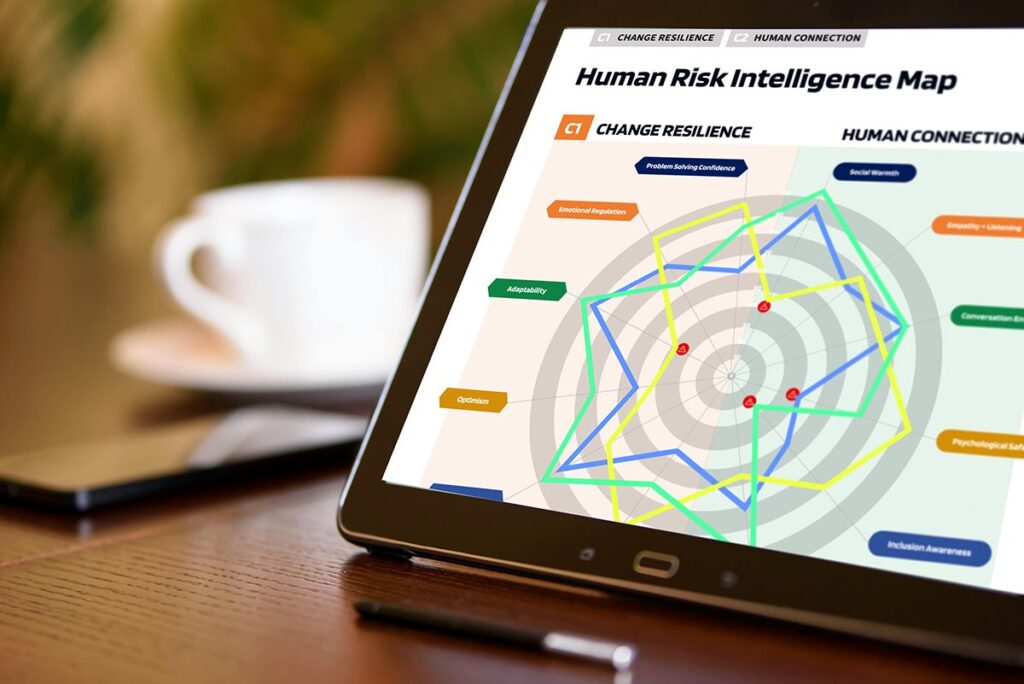 What sets C2IQ apart is its ability to make human factors measurable and manageable through a structured, evidence-based system.
- Science-Backed Assessments: Built on validated constructs from change science and organizational psychology, C2IQ’s assessments measure change resilience, connection, and adaptability with precision, providing reliable data rather than opinions or guesswork.
- Human Risk Mapping: C2IQ maps change resilience and human connection across individuals, teams, and organizations, offering a clear view of how people adapt, connect, and collaborate under pressure.
- Data Visualization and Insights: The platform provides intuitive dashboards and role-level insights, enabling leaders to pinpoint high-risk zones and uncover opportunities for development..
- Continuous Monitoring: The platform enables ongoing measurement and intervention, ensuring that improvements are visible, trackable, and sustainable over time.
C2IQ turns human risk into organizational intelligence, helping companies create safer, stronger, and more connected workplaces.
Contact C2IQ today to see how human risk intelligence can protect and strengthen your organization.